Skip to Content

What Are Pedestrians’ Rights in Maryland?
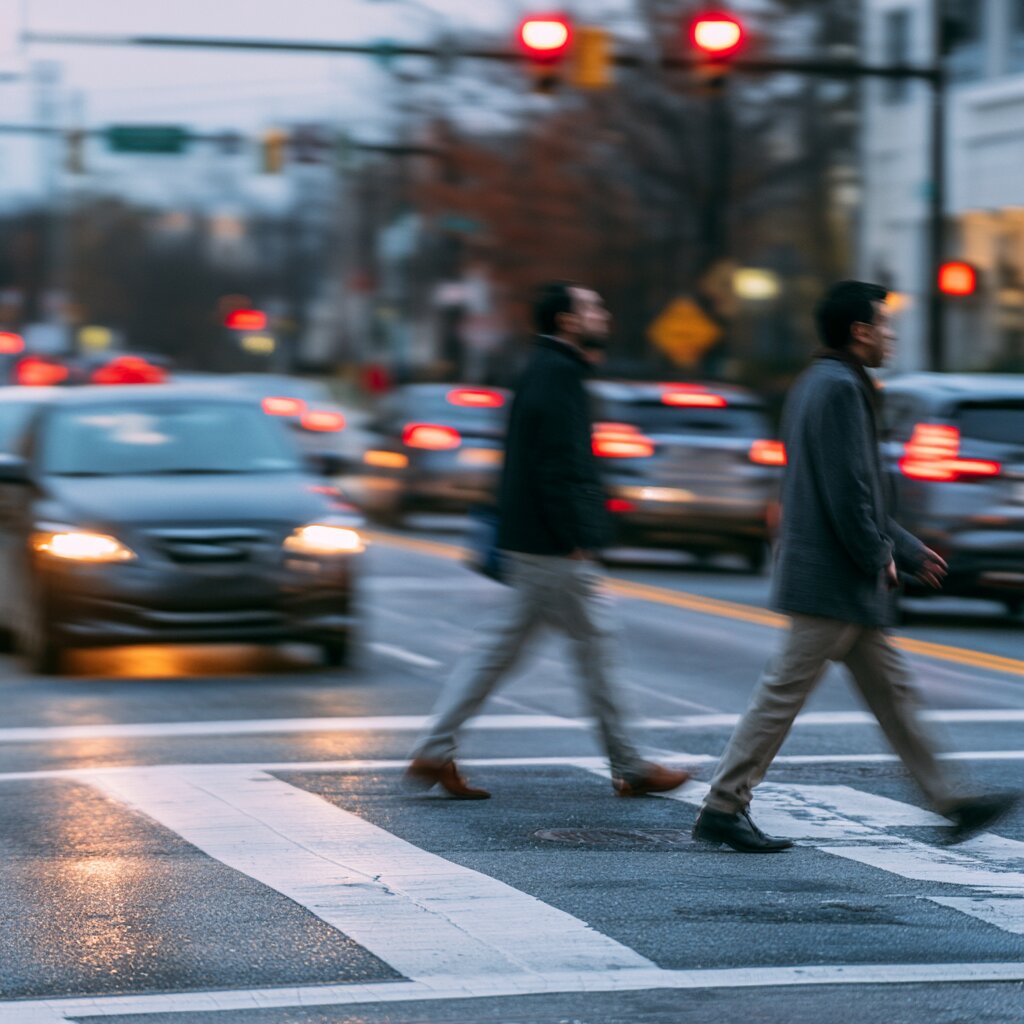
In Maryland, pedestrians have the right of way in both marked and unmarked crosswalks, but that protection is not unconditional as it depends on where and how you are crossing.
Drivers face specific duties at intersections, crosswalks, and midblock crossings under Maryland’s right-of-way laws, and violations can carry serious criminal penalties under the state’s Vulnerable Road User law.
At the same time, Maryland’s strict contributory negligence rule means that even a small share of fault on your part can eliminate your right to compensation entirely.
What Drivers Must Do at Crosswalks
Drivers must come to a complete stop when you are in a crosswalk on their half of the road. They must also stop if you are approaching closely enough that continuing to drive would put you in danger. Blocking a crosswalk with a vehicle is also illegal, as it forces you into active traffic lanes.
Two additional driver duties are worth knowing:
- Turning at a green light: Drivers turning right or left on a green light must yield to you in the crosswalk before completing their turn.
- Right turn on red: If a driver turns right on a red light, they must yield to you in the adjacent crosswalk before proceeding.
- Passing stopped vehicles: It is illegal for a driver to pass another vehicle that has stopped for a pedestrian, whether the crosswalk is marked or unmarked. Violations can result in up to two months in jail or a $1,000 fine if an illegal pass causes a crash.
What Counts as a Crosswalk in Maryland?
Most people assume a crosswalk only exists where there are painted white lines. Maryland law actually recognizes two types, and you have legal protections in both.
Marked Crosswalks
A marked crosswalk is a crossing area painted with white lines or identified with signage. You will find these at intersections and at some midblock locations. Drivers are legally required to stop and yield to you in these clearly visible zones.
Unmarked Crosswalks
An unmarked crosswalk is the area where a sidewalk would naturally extend across the road at an intersection, even without any paint or markings. Many drivers do not realize these exist. You still have the right of way in an unmarked crosswalk, which is one of the most overlooked pedestrian protections in Maryland law.
When Must Pedestrians Yield in Maryland?
Your rights as a pedestrian come with real legal responsibilities. Maryland law requires you to yield in specific situations, and failing to do so can be used against you if you are ever injured.
You must yield the right of way when:
- Crossing midblock: You must yield to all vehicles if you cross outside of a marked or unmarked crosswalk.
- Facing a red signal or “Don’t Walk” sign: You cannot legally enter the roadway while these signals are active.
- Crossing diagonally: You cannot cross an intersection at an angle unless a traffic signal specifically permits it.
- Stepping into fast-moving traffic: You cannot suddenly leave a curb and walk into the path of a vehicle that is too close to stop safely.
If you are already legally inside the crosswalk when the signal changes to “Don’t Walk,” you have the right to finish crossing. You are not required to stop mid-street.
What Are Maryland Laws for Pedestrians Along Roadways?
Maryland law also governs where you must walk when you are not actively crossing a street.
Sidewalks and Road Shoulders
You must use a sidewalk whenever one is available. When no sidewalk exists, you must walk on the left shoulder of the road, facing oncoming traffic. This keeps you visible to drivers and gives you time to react if a vehicle drifts toward you.
Emergency Vehicles and Work Zones
You must yield to emergency vehicles that are actively using their sirens and flashing lights. In construction and work zones, you should exercise extra caution, as these areas often have altered traffic patterns and reduced pedestrian protections.
What Is the Vulnerable Road Users Law?
Maryland’s Vulnerable Road User law, passed in 2021, was created to protect people who are outside of vehicles. A vulnerable road user includes pedestrians, cyclists, road workers, and emergency personnel. This law signals that Maryland treats injuries to these individuals as a serious matter.
Drivers who seriously injure or kill a vulnerable road user can face:
- Penalties include Fines up to $2,000.
- A mandatory court appearance
- Up to 150 hours of community service.
- A license suspension ranging from seven days to six months
Why Do Crosswalk Crashes Happen in Maryland?
Most pedestrian accidents are entirely preventable. They are the result of driver behavior, not bad luck.
Common causes include:
- Failing to yield while turning right on a red light
- Running yellow lights at intersections
- Driving while distracted by a phone, GPS, or passengers
- Driving while impaired by alcohol or drugs
- Speeding through residential neighborhoods and school zones
Can You Recover Compensation After a Pedestrian Accident?
If a driver’s negligence caused your injuries, you have the right to pursue financial compensation. At Leppler Injury Law, attorney John Leppler personally handles every pedestrian accident case. You will never be passed off to a paralegal or an associate you have never met.
Contributory Negligence in Maryland
Maryland follows a rule called contributory negligence. This means that if an insurance company or a jury finds you even one percent at fault for the accident, you recover nothing at all. Insurance companies know this rule well and use it aggressively to deny claims.
Common tactics insurers use to shift blame onto you include:
- Claiming you stepped off the curb before you had the right of way
- Arguing you were wearing dark clothing and were not visible to the driver
- Accusing you of being distracted by your phone while crossing
This is exactly why having an experienced attorney in your corner matters. John Leppler knows these tactics and knows how to counter them.
What Damages Can You Claim?
If your claim is successful, you may be able to recover compensation for a wide range of losses.
Recoverable damages include:
- Current and future medical bills
- Lost wages and reduced earning capacity
- Pain and suffering
- Permanent disability or disfigurement
Deadlines to File a Claim in Maryland
In Maryland, you have three years from the date of your accident to file a personal injury lawsuit. Missing this deadline means permanently losing your right to compensation. Evidence also disappears quickly, so the sooner you contact Leppler Injury Law, the stronger your case will be.
Injured in a Maryland Pedestrian Accident? Get Legal Help Today
If you were hit by a vehicle in Baltimore or the surrounding area, you do not have to face the insurance company alone. Attorney John Leppler understands how overwhelming this experience is, and is here to fight for the compensation you deserve.
Leppler Injury Law operates on a no-fee-unless-you-win policy, so there is no financial risk to getting started. John personally handles every aspect of your case and welcomes your calls and questions throughout the entire process. Contact us today for a free consultation.
Frequently Asked Questions
Does a Driver Have to Stop if You Are Waiting at the Curb?
No, a driver’s legal duty to stop is triggered only when you physically step into the crosswalk on their half of the road. Simply standing at the curb does not require them to stop.
Is Crossing Against a “Don’t Walk” Signal Illegal in Maryland?
Yes, entering the roadway while facing a “Don’t Walk” signal is a violation of Maryland traffic law. It can also be used by an insurance company to argue that you were at fault for the crash.
What Is Jake’s Law in Maryland?
Jake’s Law is a Maryland law that imposes criminal penalties on drivers who cause serious injury or death while using a handheld phone. A conviction can result in up to one year in prison and a $5,000 fine.
Can You Use Your Own Auto Insurance as a Pedestrian Accident Victim?
Yes, your own auto insurance policy’s uninsured or underinsured motorist coverage can apply even when you are on foot. This is especially important if the driver who hit you has no insurance or fled the scene.
Should You Give a Statement to the Insurance Company Before Calling a Lawyer?
No. You should never give a recorded statement to an insurance company before speaking with an attorney. Because of Maryland’s contributory negligence rule, insurers will look for any statement they can use to place even partial blame on you.